

Natural Gas & Pipelines
Sekvoiya Petroleum (Kazakhstan), TOO operates an integrated natural gas system as part of its broader energy infrastructure, supported by four gas production bases strategically located across key hydrocarbon regions of Kazakhstan. These production hubs feed a coordinated midstream pipeline network of approximately 5,000 km, which connects upstream assets with processing facilities, storage infrastructure, and domestic distribution corridors. Integrated dispatching and logistics systems ensure continuous balancing of supply and demand, enabling reliable delivery to industrial consumers and downstream markets. Together with the company’s petroleum logistics operations, the natural gas network forms part of a unified energy infrastructure that supports national supply stability and efficient resource distribution across Kazakhstan.
Distribution
Sekvoiya Petroleum (Kazakhstan), TOO has established an integrated Oil & Gas Operations Control Center to enable centralized dispatch, monitoring, and optimization of its production, transportation, and storage infrastructure. The center supports efficient coordination of the Company’s oil and gas pipeline operations, enhancing operational reliability, safety, and responsiveness across its asset portfolio.
The Company operates underground gas storage facilities with continuously enhanced peak-shaving capabilities of up to 3.5 billion cubic meters, providing greater flexibility in managing seasonal demand fluctuations and strengthening energy supply security. These facilities support efficient balancing of supply and demand while improving the Company’s ability to respond to periods of increased consumption.
Sekvoiya Petroleum adjusts natural gas production and supply strategies according to market demand, seasonal variations, and regional consumption requirements. By optimizing pipeline utilization, managing underground gas storage injection and withdrawal cycles, and improving operational coordination, the Company effectively balances production and sales while ensuring stable and reliable gas supply for residential, industrial, and commercial customers.
In 2025, Sekvoiya Petroleum’s natural gas sales reached approximately 22.5 billion cubic meters, representing a 4.2% year-on-year increase. The Company continued to expand its end-user gas markets, with direct customer sales reaching approximately 5.0 billion cubic meters, supported by enhanced infrastructure utilization, improved supply management, and integrated energy solutions.
Liquefied Natural Gas (LNG)
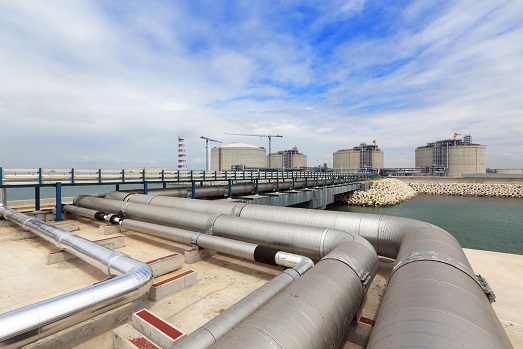
Sekvoiya Petroleum (Kazakhstan), TOO has developed LNG-related capabilities as a complementary component of its broader natural gas supply system in Kazakhstan. These facilities are primarily used for peak shaving, regional supply stabilization, and supporting industrial and transport demand in areas not directly connected to the main pipeline network.
LNG infrastructure within the company’s system works in coordination with its pipeline and gas production assets, helping to balance seasonal fluctuations in demand and ensuring continuity of supply to key consumption centers. This integrated approach enhances flexibility within the domestic gas distribution network while supporting the gradual adoption of LNG in selected transport applications.